

You sealed the windows, added insulation, and maybe even replaced the furnace, yet cold air still creeps across the floor and your energy bills refuse to budge. This is one of the most frustrating experiences a homeowner can face because the upgrades feel like they should have solved the problem. The truth is that drafts rarely come from a single source, and new improvements can sometimes expose or even worsen weaknesses elsewhere in the home. Understanding where air actually leaks in and out of your house is the first step toward a lasting fix rather than another round of guesswork.
Aging Rooflines and Hidden Attic Gaps
Many homeowners assume drafts start at eye level, but a significant amount of air infiltration happens through the attic and roofline. Gaps around vents, flashing, and soffits let conditioned air escape upward while pulling cold outside air in through lower gaps, a phenomenon known as the stack effect. If your roof is more than fifteen years old, deteriorated underlayment or shifted shingles can quietly compromise your home’s air seal even if the living space below was recently renovated.
Bringing in experienced roofing contractors to inspect flashing, vent boots, and ridge seals can reveal problems that generic insulation upgrades never touch. A proper inspection often catches issues invisible from the ground, including gaps that formed after storms or normal settling.
- Check for daylight visible through the attic boards near the roofline
- Look for water stains that suggest compromised flashing
- Ask about ventilation balance, since poor airflow can mimic drafty symptoms
- Have soffit and ridge vents inspected annually
Exterior Siding Seams and Moisture Barriers
Siding does more than protect your home’s appearance; it forms a critical layer against wind-driven air infiltration. Older siding materials can warp, crack, or pull away from the sheathing over time, creating small gaps that let drafts slip through around every wall stud bay. Even homes with updated windows can feel cold if the siding behind them has failed to keep its seal.
Homeowners replacing damaged or aging exterior cladding often choose LP smartside siding for its engineered wood construction and resistance to warping compared to older wood products. Because it installs with tighter seams and holds paint and caulk more consistently, it reduces the small joint gaps that let air pass through year after year. Pairing new siding with a proper house wrap ensures the improvement actually stops drafts rather than just refreshing curb appeal.
Window and Door Frame Seals That Wear Out

Even quality windows and doors lose their seal over time, especially around the frame where caulking and weatherstripping degrade under sun and temperature swings. If you had windows replaced but skipped the doors, or vice versa, you may still feel drafts because the untouched openings are pulling in outside air. Frame material matters too, since some products expand and contract more than others with seasonal temperature shifts.
Many homeowners have had success replacing older entry and patio doors with Milgard doors, which are built with tighter tolerances and durable weatherstripping designed to hold a seal for years. Even so, no door lasts forever without maintenance, so checking the sweep at the bottom and the compression seal along the sides should be part of a seasonal routine.
- Run a hand around the frame edges on a windy day to feel for air movement
- Check weatherstripping for cracking, flattening, or gaps
- Inspect door sweeps for wear that lets air pass underneath
- Recaulk exterior trim if you notice separation from the siding
Window Treatments That Add an Extra Layer

Windows themselves are only part of the equation, because what covers them affects how much conditioned air stays inside. Thin curtains or broken blinds do little to stop the cold radiating off glass panes, especially in older homes with single-pane or poorly sealed double-pane windows. Adding a well-fitted window covering can meaningfully cut down on the draft sensation even before any structural repairs happen.
Faux wood blinds are a popular choice because they provide a tighter fit within the window frame than fabric curtains and offer better insulation against temperature transfer. Unlike real wood, they resist warping in humid or temperature-fluctuating rooms, which keeps the slats closing snugly instead of leaving small gaps. This makes them a practical, budget-friendly addition alongside larger renovation projects.
Foundation Cracks and Crawlspace Vents
Drafts do not only come from above; they frequently rise up from the foundation and crawlspace. Cracks in the foundation wall, unsealed crawlspace vents, and gaps around pipe penetrations all allow outside air to seep into the lowest level of the home, which then rises through the house via the stack effect. This is a common reason homeowners feel cold floors even after upgrading windows and insulation elsewhere.
Sealing foundation cracks with appropriate masonry sealant and installing vent covers for winter months can noticeably reduce this type of infiltration. It is worth having the foundation inspected periodically, since settling and freeze-thaw cycles can reopen old cracks that were previously sealed.
- Inspect crawlspace vents and consider seasonal covers
- Seal visible foundation cracks with masonry-grade sealant
- Check where utility lines and pipes enter the foundation
- Add a vapor barrier if your crawlspace does not already have one
Septic and Plumbing Penetrations Through Exterior Walls
Every pipe that passes through an exterior wall or foundation creates a potential air leak if it was not properly sealed during installation or subsequent repairs. This is especially true around plumbing vent stacks and drain lines connected to a septic system, where gaps are sometimes left larger than necessary to accommodate future maintenance access. Over time, the foam or caulk used to seal these penetrations can shrink, crack, or fall out entirely.
If you have recently had septic pumping performed or other plumbing work done near the foundation, it is worth double-checking that any disturbed sealant around access points was properly restored afterward. A quick visual inspection after any plumbing service can catch a gap before it becomes a persistent source of cold air.
Wall Cavities Affected by Termites and Pests
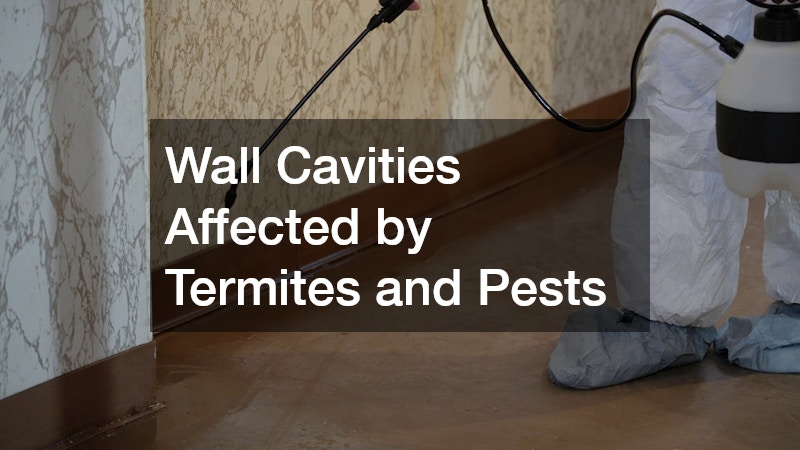
Structural pests can create unexpected air pathways inside your walls that no amount of new insulation will fix if the underlying damage is not addressed. Termites, in particular, hollow out wood framing and can compromise the tight fit of studs, sheathing, and trim, leaving small but cumulative gaps throughout a wall cavity. Homeowners are often surprised to learn that a persistent draft in one room traces back to pest damage rather than a window or door problem.
Scheduling regular termite control inspections protects both the structural integrity of your home and its ability to hold an effective air seal. If damage is found, repairing the affected framing before adding new insulation or drywall ensures the fix actually lasts rather than covering up a worsening problem.
- Look for hollow-sounding wood or small exit holes near baseboards
- Check crawlspaces and attics for mud tubes along framing
- Address moisture issues that attract termites in the first place
- Repair damaged framing before completing cosmetic upgrades
Kitchen and Bathroom Vents That Undermine Insulation
Exhaust fans and range hood vents are necessary for air quality, but poorly sealed ducting can become a direct pipeline for outside air when the fan is off and the damper fails to close completely. This is a common oversight during renovations, since new appliances get installed without revisiting the venting behind the wall. A kitchen that recently went through kitchen remodeling can still feel drafty near the stove or sink if the exterior vent cap and duct connections were not properly sealed during the project.
Checking that all exhaust dampers close fully and that ducting is insulated where it passes through unconditioned space can eliminate a surprisingly large source of air leakage. This is a detail worth confirming with your contractor before considering the renovation complete.
- Test that exhaust fan dampers close tightly when the fan is off
- Insulate ductwork that runs through the attic or crawlspace
- Seal the exterior vent cap with weatherproof caulk
- Confirm duct connections are taped and sealed, not just pushed together
Structural Damage From Fire or Water That Compromises Sealing
Homes that have undergone repairs after fire damage or significant water intrusion sometimes carry hidden air sealing issues long after the visible restoration is finished. Reconstructed framing, patched drywall, and replaced insulation must all be installed with the same attention to air sealing as the original construction, and rushed repairs can leave gaps behind finished surfaces. If your drafts started or worsened after a restoration project, the repair work itself may be the source.
It is reasonable to ask a contractor specifically how they addressed air sealing and vapor barriers during reconstruction, not just cosmetic finishing. A home that looks fully restored can still have compromised insulation continuity if that step was overlooked.
Interior Finishing Choices That Affect Comfort Perception

Sometimes what feels like a draft is actually a temperature differential caused by surfaces that conduct heat away from your skin, such as uninsulated exterior walls behind fresh paint or flooring. A wall with an R-value of just 4 or 5 can feel noticeably cooler to the touch than one properly insulated to R-13 or higher, even in a room with no measurable air movement. Your body senses that radiant heat loss and interprets it as a draft, even though the air itself is perfectly still. While paint itself does not stop air infiltration, the quality and preparation involved in a paint job often correlates with how thoroughly trim, baseboards, and outlet covers were sealed during the process. Painters who take the time to caulk gaps before priming are also the ones likely to catch small openings around window casings, crown molding, and floor transitions that would otherwise leak conditioned air. In this sense, a careful paint job can be a useful proxy for how much attention was paid to the room’s overall envelope. Choosing a quality product like Benjamin Moore paint alongside proper caulking at trim joints can help finish a room in a way that supports, rather than undermines, your air sealing efforts. Look for painters or DIY guides that specify paintable acrylic latex caulk rather than standard latex, since it holds up better to seasonal expansion and contraction without cracking. Pay particular attention to the top and bottom edges of baseboards, where a 1/8-inch gap is common in older homes and can quietly funnel cold air into a room. Sealing these details before the final coat goes on ensures your finish work reinforces your insulation rather than simply masking the problems underneath.
Pool areas present a related but distinct comfort issue, since a deteriorating pool surface can increase humidity and evaporative cooling near adjacent living spaces. Cracked or worn plaster allows water to seep into the surface and evaporate more readily, which raises ambient humidity levels around the pool enclosure. That extra moisture in the air accelerates evaporative cooling, pulling heat from nearby surfaces and making adjoining rooms feel several degrees cooler than the thermostat reading suggests. This effect is especially noticeable in homes with indoor or enclosed pools, where humidity has nowhere to escape and tends to migrate into hallways, sunrooms, or bedrooms that share a wall with the pool area. Homeowners often respond by cranking up the heat, only to find the chill persists because the underlying moisture problem hasn’t been addressed. Telltale signs include musty odors, visible condensation on windows near the pool room, or a clammy feeling in the air even when the furnace is running. If you have noticed a chill near rooms bordering an indoor or enclosed pool, evaluating whether the surface needs pool replastering can reduce excess moisture that makes nearby air feel colder than the thermostat suggests. A qualified pool contractor can inspect the plaster for hairline cracks, rough patches, or delamination, and estimate how much water loss is occurring through the surface. Addressing pool replastering promptly not only stabilizes indoor humidity and comfort but also prevents more costly structural damage to the pool shell and surrounding framing down the line.
Persistent drafts almost always trace back to a combination of small, overlooked gaps rather than one obvious failure, which is why isolated upgrades sometimes fail to deliver the comfort you expected. Walking through your home methodically, from the roofline down to the foundation, gives you a much clearer picture of where air is actually getting in. Addressing these problem areas in the right order, rather than randomly upgrading one component at a time, will save you money and frustration in the long run. Start with an inspection of the areas covered here, and you will be well positioned to finally solve the draft for good.