

A fresh coat of paint or a stylish new rug can make almost any room look pulled together in an afternoon. But decor choices are sometimes used, intentionally or not, to mask problems that go far deeper than aesthetics. Before you fall in love with a staged room or a quick cosmetic fix in your own home, it pays to know which design tricks are commonly used to hide expensive structural, mechanical, or exterior issues.
Learning to spot these red flags now can save you thousands of dollars and a lot of stress later.
Fresh Paint Covering Water Stains and Cracks
A brand new paint job feels like a clean slate, but it can also be the fastest way to disguise water damage, hairline cracks, or mold before a sale or a family gathering. Sellers and even well-meaning homeowners sometimes repaint a ceiling or wall specifically because a stain kept reappearing, rather than because they wanted a style refresh. If you notice paint that looks noticeably newer in one section of a room, or a color that does not quite match the rest of the house, that is worth a closer look.
It is worth remembering that paint itself is not the enemy here; it is what might be underneath it. A reputable painting company will tell you that proper prep work includes addressing the underlying cause of stains, not just priming over them. If you are hiring a painting company for touch-up work, ask directly whether they noticed any moisture, soft drywall, or discoloration before they started, since professionals often spot these issues early.
- Run your hand over the wall to feel for soft spots or bubbling under fresh paint
- Compare paint sheen and color across walls and ceilings for inconsistencies
- Ask when the room was last painted and why
- Check corners and ceiling lines, where leaks most often show up first
- Look for faint discoloration rings that paint did not fully cover
Large Area Rugs Placed Over Uneven or Damaged Flooring

An oversized area rug in an otherwise sparsely furnished room can be a stylistic choice, or it can be strategically placed to hide warped boards, deep scratches, water damage, or uneven subflooring. Rugs are especially common cover-ups in older homes where hardwood floors have suffered years of wear, pet damage, or moisture exposure near exterior doors and kitchens. If a rug seems oddly large for the space or is positioned in an unusual spot away from typical furniture arrangements, it is worth lifting a corner to check.
Once you see what is underneath, you will have a much better idea of what kind of work lies ahead. Many issues that look alarming at first, like surface scratches or dullness, can often be resolved through hardwood floor refinishing rather than a full floor replacement, which is good news for your budget. However, if you see cupping, staining, or soft spots in the wood, that points to moisture damage that needs to be addressed at the source before any hardwood floor refinishing takes place.
- Lift rug corners in rooms with unusually placed or oversized area rugs
- Check for discoloration, cupping, or soft wood underneath
- Note musty smells, which can indicate trapped moisture
- Ask how long the rug has been in that specific spot
Strategically Placed Furniture Hiding Foundation or Wall Issues
A large bookshelf pushed against an odd wall, or a bed angled away from a corner, can sometimes be arranged to draw attention away from cracks, bulging drywall, or uneven flooring near the foundation. This is particularly common in basements, where furniture placement can distract from a much bigger structural story. If a room’s layout feels oddly rearranged compared to how you would naturally set it up, take a moment to look behind the largest pieces.
Cracks that run diagonally, stair-step patterns in brick or block walls, or doors and windows that no longer close properly are signs that go beyond decor and into structural territory. Experienced basement contractors often say that early, visible warning signs are far cheaper to address than the damage that follows years of ignoring them. If you notice any of these signs, it is worth getting an opinion before you buy or before problems get worse in a home you already own.
- Move furniture away from walls in basements and lower levels to inspect for cracks
- Look for gaps around windows and doors, which can indicate shifting
- Check floors for noticeable slopes or dips
- Watch for efflorescence, a white chalky residue that signals moisture intrusion
Air Fresheners and Candles Masking Sewage or Drainage Odors

A house that smells like vanilla or fresh linen in every single room can be a pleasant coincidence, or it can be an attempt to mask something much less pleasant lingering underneath. Sewage odors, especially ones that come and go, are often linked to plumbing vents, sump pumps, or septic systems that are not functioning properly. If you catch a whiff of something sour near a drain or in a basement corner before the air freshener kicks back in, do not ignore it.
For homes not connected to municipal sewer lines, persistent odors near the yard or lower level are frequently tied to septic tank services being overdue. A septic system that has not been pumped or inspected on a normal schedule can start backing up gases into the home, which homeowners sometimes cover up with fragrance rather than addressing directly. Scheduling routine septic tank services is a far cheaper fix than dealing with a backed-up system or contaminated yard later on.
- Notice if odors are stronger in specific rooms or near drains
- Ask when the septic system was last pumped or inspected
- Be cautious of heavy air freshener use concentrated in one area
- Look outside for unusually soggy or greener patches of lawn near the septic field
Decorative Planters and Landscaping Hiding Drainage Failures
Flower beds, potted plants, and mulch piled up against a foundation can look charming, but they are also a popular way to disguise grading problems or gutter overflow that has been damaging the foundation for years. When water is not being properly diverted away from a house, homeowners sometimes respond by planting greenery to soften the visual impact of erosion or staining rather than fixing the underlying drainage issue. If landscaping seems unusually lush or freshly installed right against the foundation line, it is worth investigating what it might be covering.
Gutters play a huge role in this story, since damaged or clogged gutters are one of the most common causes of foundation-adjacent water damage. Seamless gutters have become popular because they reduce the leak points that traditional sectional gutters are prone to, but even seamless gutters need regular cleaning and inspection to function properly. If you see rust streaks, sagging sections, or water pooling near planters after rain, that points to a drainage issue that landscaping alone will never solve.
- Check for soil or mulch piled higher than the foundation’s weep holes or siding
- Look for erosion channels or pooling water near flower beds
- Inspect gutters for sagging, rust, or visible gaps
- Watch where downspouts empty and whether water is directed away from the house
Privacy Screens and Trellises Concealing Fence Damage
A charming trellis covered in climbing vines or a decorative privacy screen can make a backyard feel like a private retreat, but it can also be positioned specifically to hide rotting posts, leaning sections, or damaged panels along a property line. This is a common tactic in homes preparing to sell, since a fence in poor condition can raise questions about property maintenance overall. Walking the full perimeter of a fence line, rather than just admiring the decorated sections, will give you a much more honest picture.
If you do find rot, rust, or leaning posts, it is worth getting an estimate before assuming the whole structure needs replacing. A fence company can often repair individual sections or posts rather than replacing an entire fence line, which keeps costs more manageable. Getting a quote from a fence company early also helps you budget accurately if you are negotiating a home purchase or planning your own backyard project.
- Walk the entire fence line, not just the decorated or visible sections
- Push gently on posts to check for looseness or rot at the base
- Look for panels that do not match in age, wear, or wood tone
- Check gate hinges and latches for excessive rust or misalignment
Overgrown Trees and Shrubs Disguising Roof and Chimney Wear

Mature trees and full landscaping can boost curb appeal significantly, but overgrown branches hanging close to a roofline can also hide missing shingles, damaged flashing, or a chimney that has not been cleaned in years. Branches that scrape against a roof during wind can accelerate wear in ways that are not visible from the ground once leaves fill in during spring and summer. If a home has thick tree cover directly over the roof, it is worth asking when the branches were last trimmed and why they were allowed to grow so close.
A regular relationship with tree services does more than keep a yard looking neat; it protects the roof and chimney from unnecessary damage over time. Overhanging limbs can also drop debris into chimney flues, which is one reason a chimney sweep should be part of a home’s regular maintenance rather than a one-time task. If you are buying a home with visible tree cover near the roofline, budgeting for both tree services and a chimney inspection before move-in is a smart precaution.
- Check for branches touching or hanging within a few feet of the roof
- Look for leaves or debris piled in gutters or valleys
- Ask when trees near the home were last trimmed
- Request chimney inspection records if the home has a fireplace or wood stove
Outdoor Decor and Furniture Arrangements Hiding Roof and Siding Damage
Hanging plants, string lights, and outdoor furniture arranged near a porch or patio roofline can distract the eye from sagging gutters, missing shingles, or soft spots in the roof decking. Sellers staging a home for photos often focus heavily on these outdoor living spaces precisely because they draw attention upward and outward rather than toward the condition of the roof itself. Stepping back from the decor and looking at the roofline as a whole, rather than the styled vignette beneath it, gives you a much clearer picture.
If a roof is nearing the end of its lifespan, no amount of styling underneath it will change the timeline for necessary repairs. Getting a professional opinion on remaining roof life is especially important before making an offer on a home, since roof replacements are one of the more significant expenses a homeowner can face. Knowing in advance whether roof replacements are a near-term necessity or a problem years down the road can dramatically change how you negotiate or budget.
- Look past staged furniture to check for uneven or discolored roof sections
- Ask for the age of the current roof and any warranty documentation
- Check for missing, curling, or granule-shorn shingles
- Watch for daylight visible through attic boards, a sign of gaps or damage
Pressure-Washed Surfaces Masking Mold, Rot, or Structural Wear
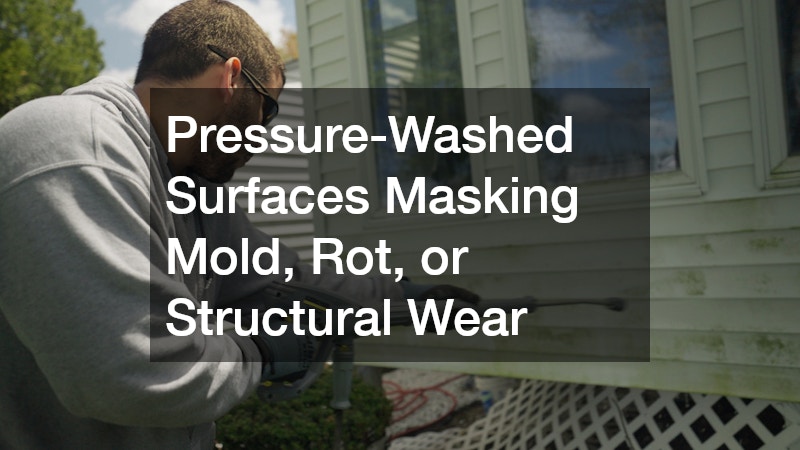
A driveway, siding, or deck that has just been power washed can look impressively clean, sometimes suspiciously so, especially if the rest of the property has not received the same level of care. Power washing is genuinely useful for removing mold, algae, and grime, but it can also be used to quickly brighten surfaces that have deeper rot or structural wear that a fresh cleaning does not actually fix. If one specific area looks dramatically cleaner than everything around it, ask why that spot in particular received attention.
Freshly power-washed wood can also temporarily hide splintering, soft spots, or rot that becomes obvious again once the wood fully dries out. It is worth pressing on deck boards, railings, and siding with your hand after any recent cleaning to check for give or softness. A one-time power washing session is not a substitute for ongoing maintenance, and repeated overuse of high pressure can actually strip protective coatings and accelerate wear if not done carefully.
- Ask when and why a specific surface was recently cleaned
- Press on deck boards and siding to check for soft or spongy spots
- Look for uneven cleanliness between similar surfaces
- Check for peeling paint or stain that cleaning may have loosened rather than removed
Conclusion
Decor and curb appeal will always play a role in how a home feels, but they should never be the only factor in how you judge its condition. By learning to look past staging, fresh paint, and seasonal touches, you put yourself in a much stronger position to catch expensive problems early. When something looks off, do not hesitate to get a professional opinion before you buy, sell, or simply let a small issue grow into a major repair.